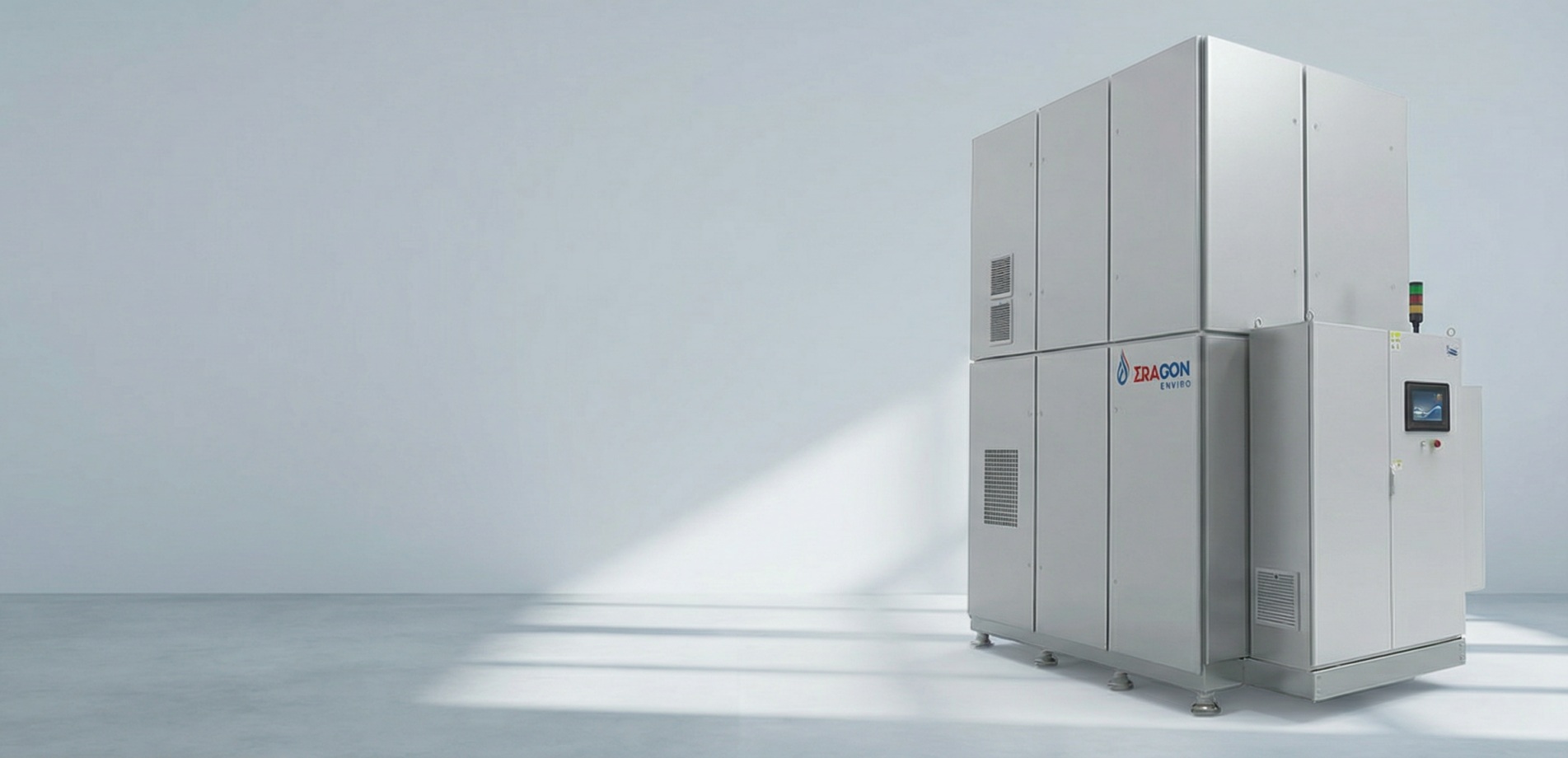
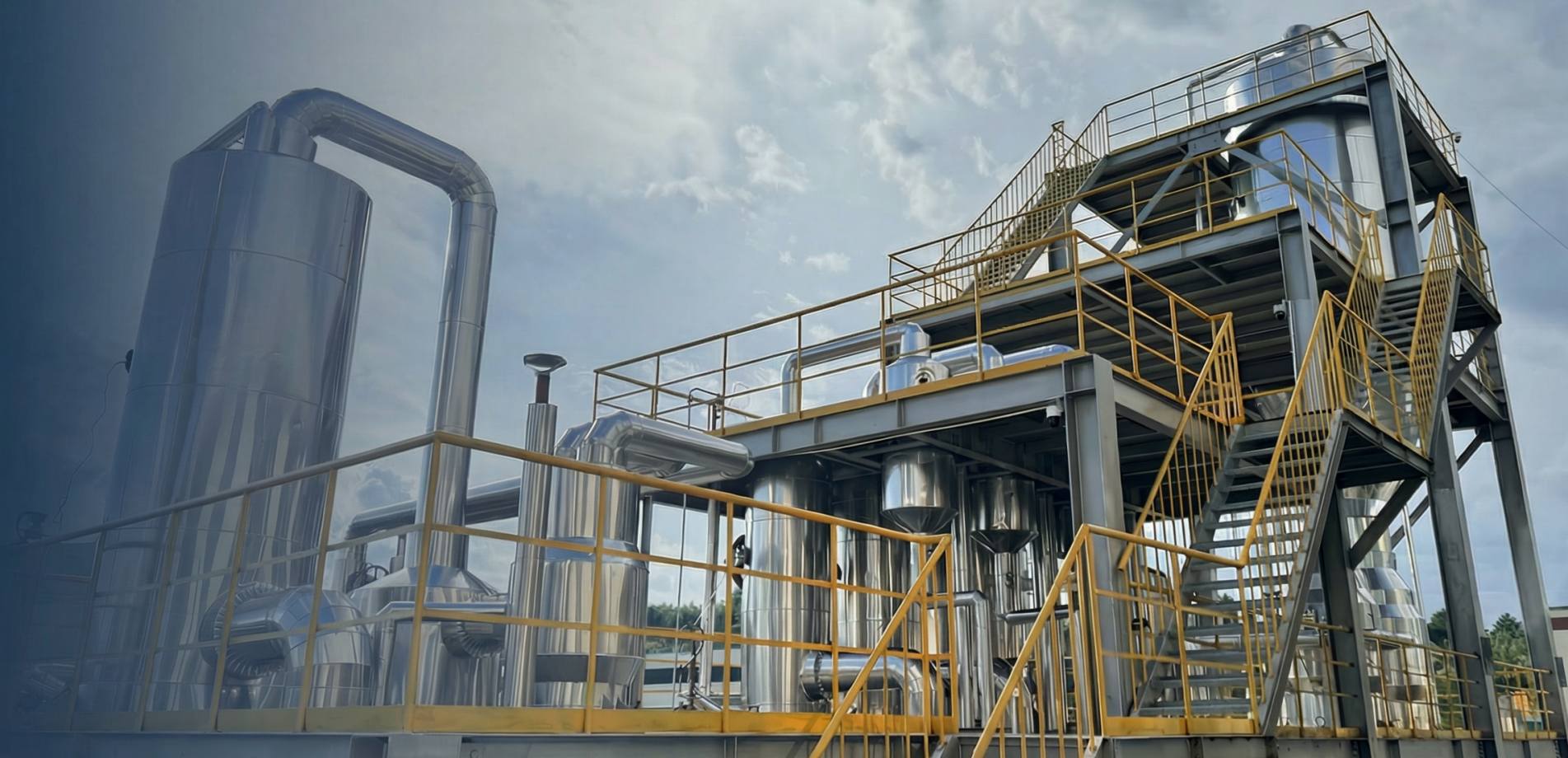
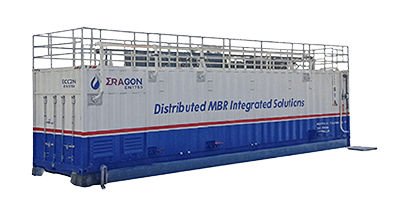
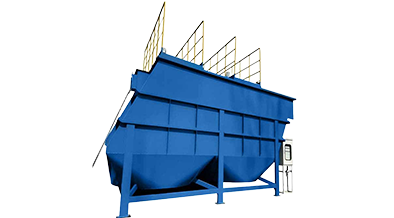
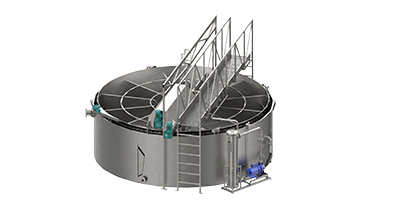
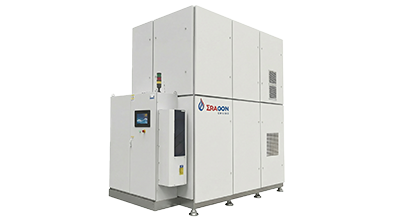
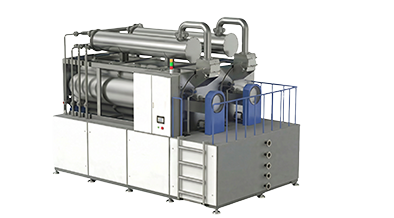
Equipment & System Packages

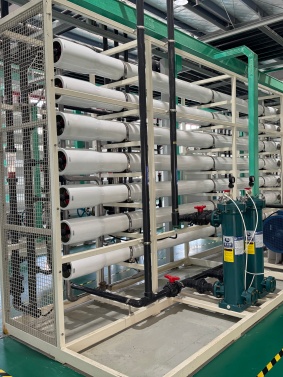
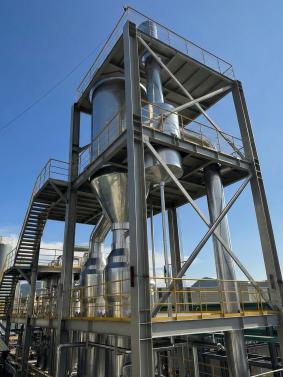
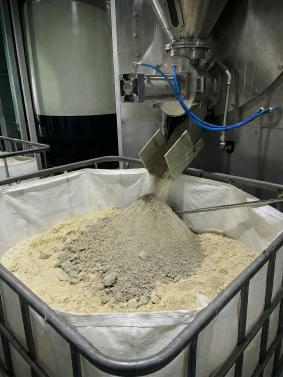
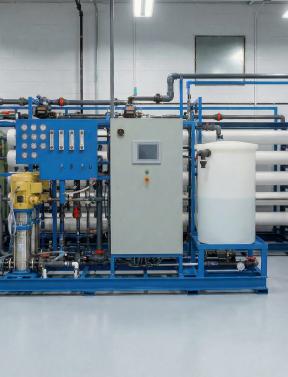
Engineered products for industrial water, wastewater reuse, and ZLD applications
ERAGON ENVIRO TECH

ERAGON ENVIRO TECH

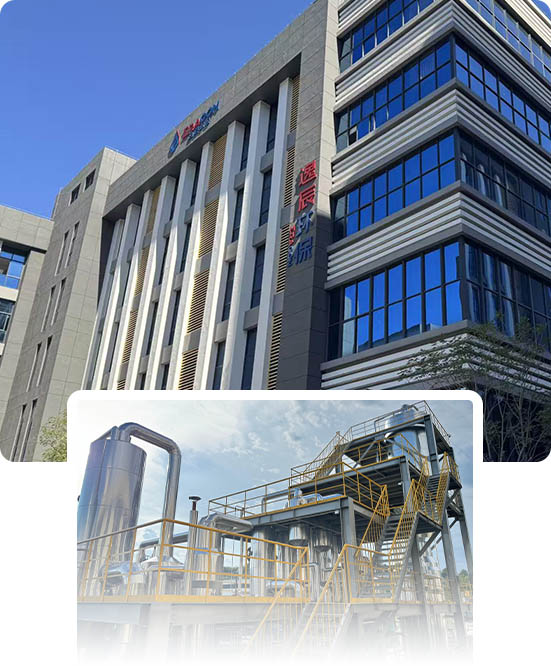
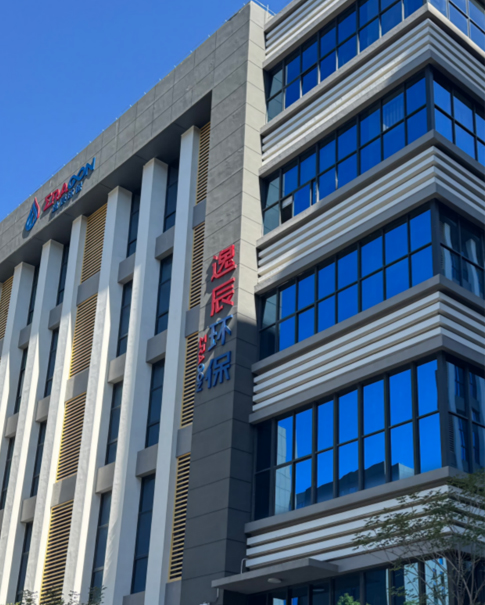
ERAGON ENVIRO TECH is a water treatment system manufacturer and EPC contractor based in Xiamen, China. With 15+ years of experience, we deliver engineered solutions for industrial water treatment, ultrapure water (UPW), wastewater reuse, MLD, and ZLD. Backed by in-house engineering and manufacturing, we support global clients with reliable project delivery and long-term operational performance.
200
200+

Projects

5000
5000+ m²

Manufacturing Base

150k
150k+ m³/d

Total Delivered Capacity

Check Company Profile

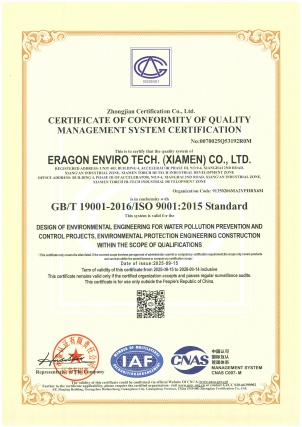
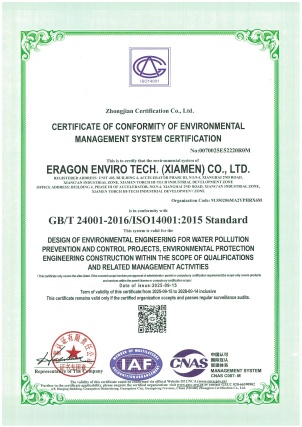
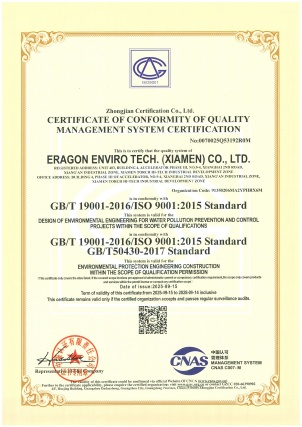
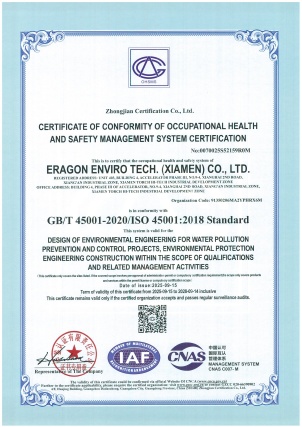
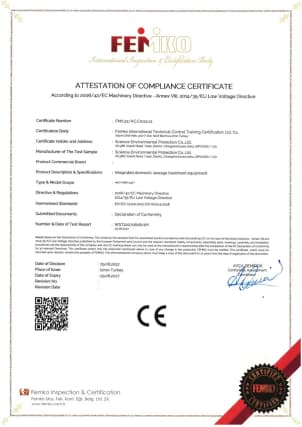
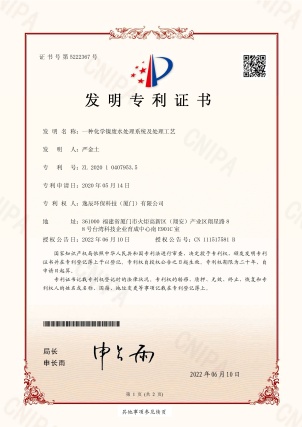
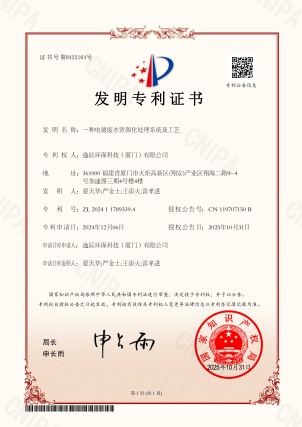
Our Certifications

ISO 9001
ISO 14001
ISO 9001
ISO 45001
CE
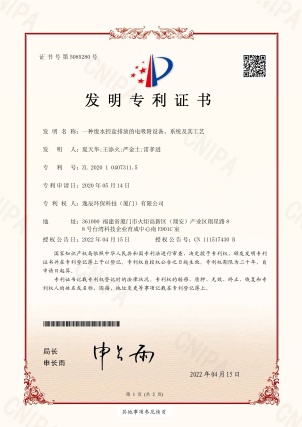
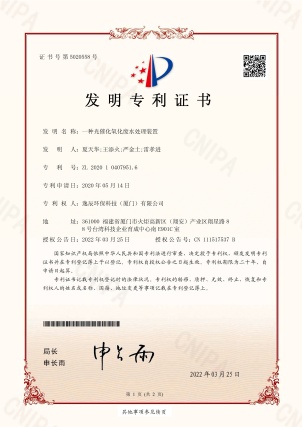
Patent-Chemical Plating Wastewater Treatment Systems
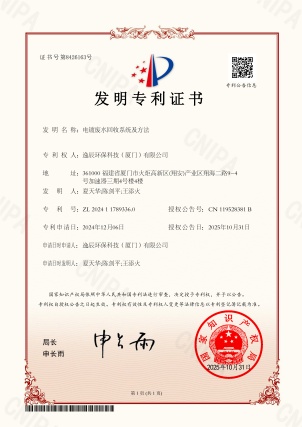
Patent-Electroplating Wastewater Resource Recovery Systems
Patent-Electroplating Wastewater Recycling Systems
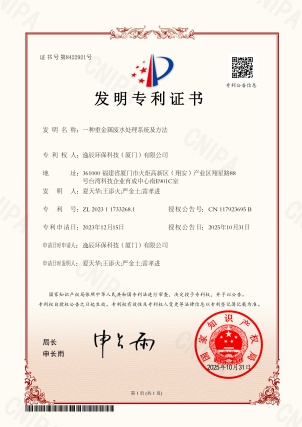
Patent-Heavy Metal Wastewater Treatment Systems
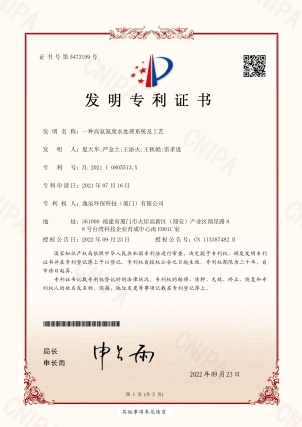
Patent-High-Ammonia Nitrogen Wastewater Treatment Systems
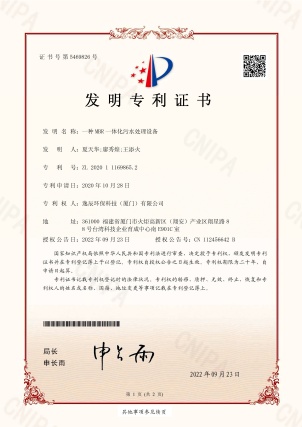
Patent-Integrated MBR Wastewater Treatment Systems
Patent-Electro-adsorption Systems For Controlled Discharge
Patent-Photocatalytic Oxidation Wastewater Treatment Technologies
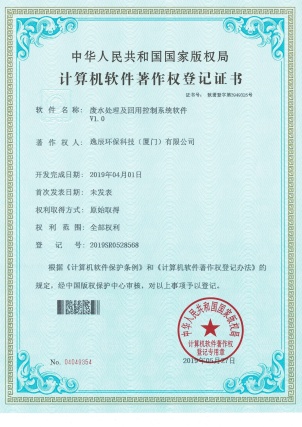
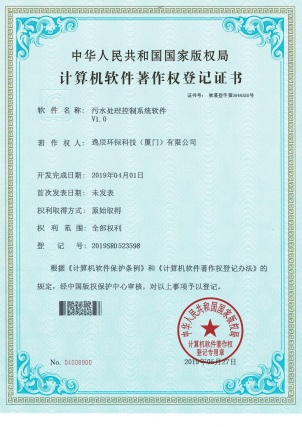
Patent-Wastewater Treatment Control Systems
Patent-Water Reuse and Recycling Control Platforms

Trusted by Global Industrial Partners

Collaborating with trusted partners worldwide to deliver reliable and sustainable water treatment solutions

Engineered Water & Wastewater Solutions for Industrial & Advanced Applications

We deliver industrial water and wastewater systems—from process design and equipment manufacturing to EPC project execution and long-term operation support
Core Technologies
Wastewater Treatment Wastewater Treatment
Wastewater Treatment
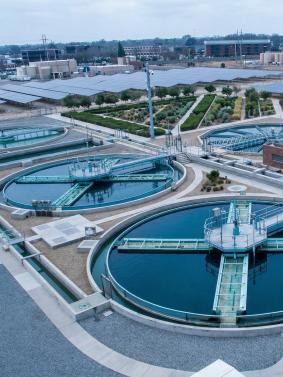
We provide engineered solutions for treating complex industrial wastewater containing high COD, heavy metals, oil, and toxic compounds. Our processes combine physical, chemical, and biological treatment to ensure stable compliance with local discharge regulations and long-term operational reliability.  
Learn more
Water Reuse & Recycling Water Reuse & Recycling
Water Reuse & Recycling
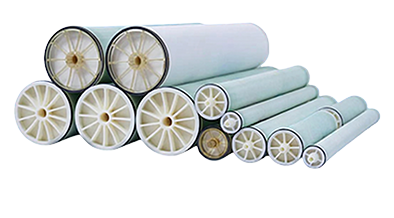
Designed to reduce freshwater consumption, our water reuse systems recover high-quality water from industrial effluent for production reuse. Through optimized membrane separation and polishing processes, we help clients lower operating costs while improving water sustainability.  
Learn more
ZLD / MLD (Zero & Minimal Liquid Discharge) ZLD / MLD (Zero & Minimal Liquid Discharge)
ZLD / MLD (Zero & Minimal Liquid Discharge)
Our ZLD and MLD solutions minimize or eliminate wastewater discharge by integrating membrane separation, evaporation, and crystallization technologies. These systems are widely applied in high-salinity and water-scarce regions, ensuring regulatory compliance and maximum water recovery.  
Learn more
Resource Recovery Resource Recovery
Resource Recovery
We enable the recovery of valuable resources such as salts, acids, alkalis, and metals from industrial wastewater streams. By converting waste into reusable materials, our solutions support circular economy goals and improve overall project economics.  
Learn more
Pure Water & Ultrapure Water Pure Water & Ultrapure Water
Pure Water & Ultrapure Water
We deliver pure water and ultrapure water systems tailored for electronics, semiconductor, energy, and advanced manufacturing industries. Our solutions meet stringent quality requirements through multi-stage membrane separation and precision polishing technologies.    
Learn more
Explore More

Explore Our Latest

Industry insights, solutions, and water treatment expertise

Eragon Enviro Tech Recognized as a National-Level “Little Giant” Enterprise in China

Eragon Enviro Tech (Xiamen) Co., Ltd. has recently been officially recognized as a National-Level “Little Giant” Enterprise under China’s Specialized and Innovative SME program, following the review and public announcement process organized by the Ministry of Industry and Information Technology (MIIT).   The “Little Giant” title is a national recognition granted to high-performing SMEs with strong capabilities in specialization, innovation, core technologies, and sustainable growth. Since its establishment in 2017, Eragon Enviro Tech has remained focused on heavy-metal wastewater minimization, resource recovery, and safe treatment for industries such as new energy, semiconductors, and electronics/electroplating, supporting both Minimum Liquid Discharge (MLD) and Zero Liquid Discharge (ZLD) targets.   With over 20 granted invention patents and multiple software copyrights, Eragon Enviro Tech will continue to strengthen R&D and engineering implementation, delivering reliable water and environmental solutions for advanced manufacturing. Source: Xiamen Municipal Bureau of Industry and Information Technology (Xiamen MIIT).
Learn more

Eragon Enviro Tech Attends 2025 Military Electroplating Forum and Shares ZLD Experience

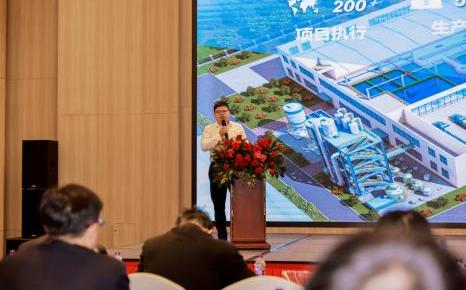
Recently, Eragon Enviro Tech (Xiamen) Co., Ltd. recently attended the 2025 Military Equipment Environmental Electroplating & New Materials Technology Forum held in Guiyang, China. Our General Manager, Mr. Xia, was invited to deliver a keynote speech on electroplating wastewater treatment and Zero Liquid Discharge (ZLD) project experience. In his presentation, Mr. Xia addressed key challenges of military electroplating wastewater, including complex composition, high toxicity, and strict discharge requirements. He introduced practical technical approaches from segregated collection and pretreatment to advanced process selection, highlighting critical engineering considerations for stable operation and compliance.   Eragon Enviro Tech remains committed to heavy-metal wastewater minimization and resource recovery, providing integrated solutions for industries such as new energy, semiconductors, electronics, and electroplating. We will continue to support sustainable industrial development through innovation and proven engineering expertise.
Learn more

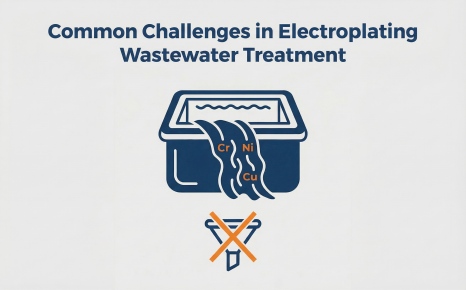
Common Challenges in Electroplating Wastewater Treatment

Electroplating wastewater has long been recognized as one of the most challenging categories in industrial wastewater treatment due to its complex composition, high pollutant concentrations, and significant toxicity. As environmental standards continue to tighten and regulatory enforcement becomes more stringent, achieving stable regulatory compliance and resource recovery has become a critical issue for the sustainable development of electroplating enterprises.   Key Technical Challenges Removal of Heavy Metal Ions Electroplating wastewater typically contains multiple heavy metal ions, such as copper, nickel, chromium, and zinc. These metals are highly toxic and difficult to degrade. Conventional chemical precipitation methods often struggle to remove multiple heavy metals simultaneously and tend to generate large volumes of metal-laden sludge, increasing the risk of secondary pollution.   Treatment of Complexed Metals Complexing agents commonly used in electroplating processes—such as EDTA and cyanides—form stable complexes with heavy metals, rendering traditional precipitation ineffective. Breaking these complexes is therefore one of the most critical technical challenges.   Impact of Influent Fluctuations Electroplating production lines frequently experience significant variations in wastewater quality and flow rate due to product changes and process adjustments, placing high demands on system stability and adaptability.   Limitations in Water Reuse Even after treatment, electroplating wastewater often contains relatively high salinity, which can negatively affect plating quality if reused directly. The high cost of advanced desalination remains a major constraint on water recycling.   Pressure on Operating Cost Control High chemical consumption, large sludge generation, and frequent equipment maintenance contribute to elevated operating costs, placing enterprises under dual pressure from environmental compliance and economic performance.   Management Challenges Strict Requirements for Segregated Collection Wastewater characteristics vary significantly among different electroplating processes, requiring strict segregated collection and treatment. However, on-site management is complex, and accidental mixing is common.   Rising Sludge Disposal Costs Sludge containing heavy metals is classified as hazardous waste, and increasingly stringent disposal standards have led to higher treatment and disposal costs, creating a significant financial burden.   Uneven Levels of Automation Many electroplating facilities still rely heavily on manual operation, resulting in unstable treatment performance and difficulty meeting increasingly stringent real-time monitoring requirements.   Shortage of Specialized Technical Talent There is a lack of professionals with combined expertise in electroplating processes and wastewater treatment, limiting system optimization and technological upgrading.   Future Development Trends Electroplating wastewater treatment is evolving toward resource recovery, waste minimization, and harmless disposal. Advanced processes such as membrane separation, advanced oxidation processes (AOPs), and electrochemical technologies are being progressively adopted. At the same time, greater emphasis is being placed on source control, process optimization, and closed-loop water management through integrated system solutions.   FAQ Q1: What is the most critical step in electroplating wastewater treatment? A: Key steps include heavy metal removal, breakdown of metal complexes, and salinity control. Stable compliance for heavy metals is the top priority.   Q2: How is cyanide-containing wastewater treated? A: The alkaline chlorination process is commonly used. Strict control of pH and oxidant dosage is essential to ensure complete oxidation and decomposition of cyanides.   Q3: Why does color remain after electroplating wastewater treatment? A: Possible reasons include incomplete breakdown of complexes, insufficient degradation of organic dyes, or residual color-causing ions such as iron and manganese. Targeted advanced treatment may be required.   Q4: How can treatment costs be reduced? A: Cost reduction can be achieved through four key measures: Improving wastewater segregation to reduce treatment volume Optimizing chemical dosing through precise control Adopting high-efficiency processes to reduce energy consumption Promoting water reuse to reduce freshwater demand   Q5: Can electroplating wastewater achieve zero liquid discharge (ZLD)? A: Technically feasible, but economically challenging. It requires a combination of advanced treatment technologies and effective management of high-salinity concentrate, resulting in high capital and operating costs.   Q6: What should be considered when selecting treatment technologies? A: Key considerations include treatment stability, adaptability to influent fluctuations, controllable operating costs, ease of maintenance, and the need for pilot-scale validation.
Learn more

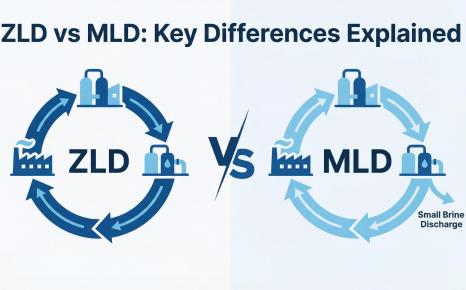
ZLD vs MLD: Key Differences Explained

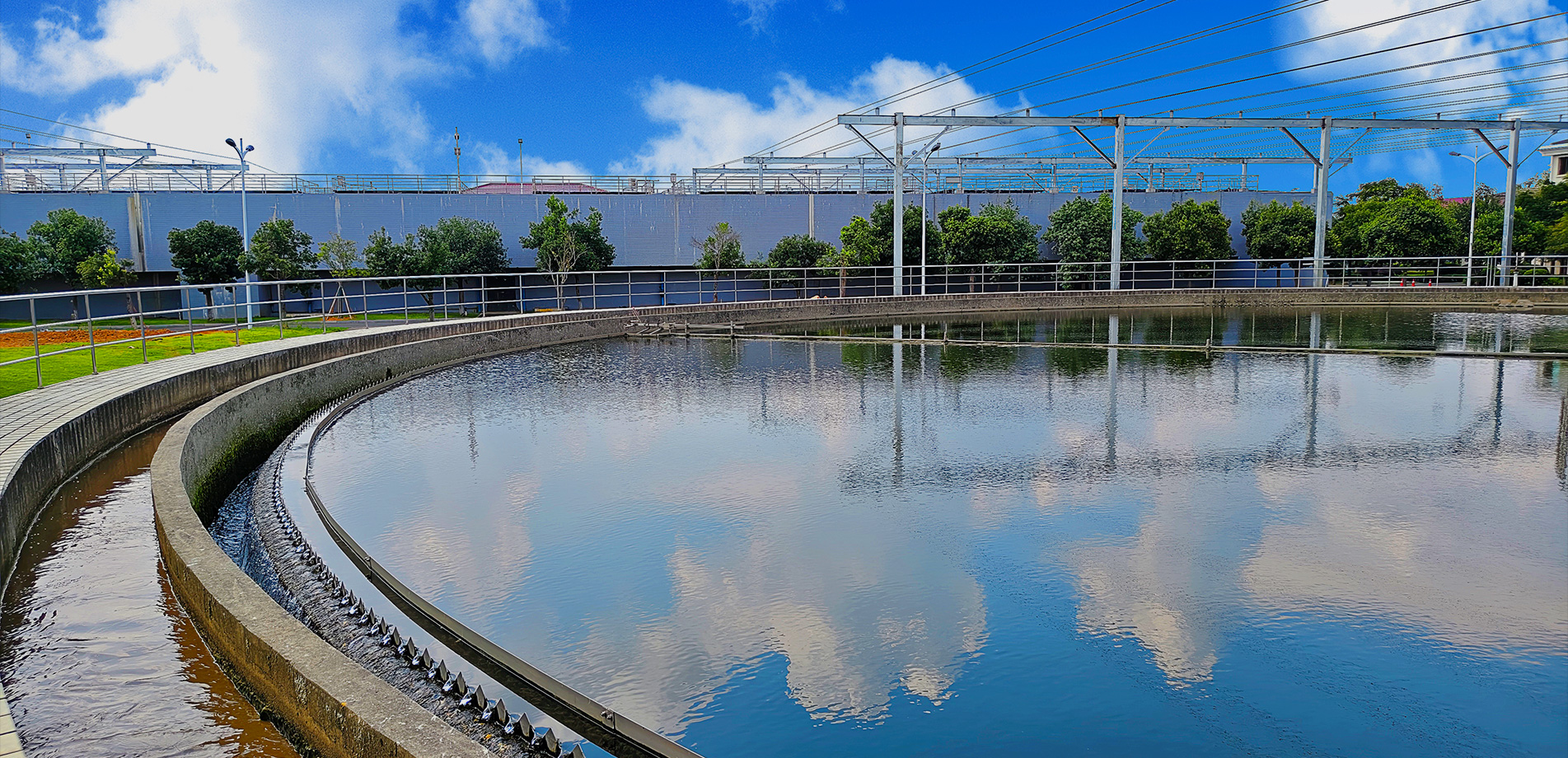
Against the backdrop of increasing water scarcity and tightening environmental regulations, Zero Liquid Discharge (ZLD) and Minimum Liquid Discharge (MLD) have become unavoidable technology options in industrial wastewater management. A clear understanding of the differences between these two approaches directly affects regulatory compliance, investment efficiency, and long-term operational viability.   1. Typical Application Scenarios in Practice ZLD (Zero Liquid Discharge) ZLD is applicable where regulations mandate zero discharge or where water resources have exceptionally high value, such as in coal chemical processing, fine chemicals, and certain power generation sectors. The system converts all wastewater into reusable water and solid salt residues, achieving true zero liquid discharge.   MLD (Minimum Liquid Discharge) MLD is commonly adopted where a balance between economic efficiency and practical operation is required, such as in general manufacturing and industrial parks. Through high-efficiency technologies such as membrane concentration, MLD typically achieves 90–95% water recovery, with a small volume of concentrate managed through compliant disposal routes.   2. Key Differences in Technology Implementation and Operation System Complexity ZLD systems must include energy-intensive evaporation and crystallization units, resulting in highly integrated and complex process control. MLD systems are comparatively simpler, with membrane concentration as the core, enabling more straightforward operation and maintenance.   Operating Cost Structure ZLD operating costs are dominated by energy consumption in evaporation and crystallization, accounting for approximately 60–80% of total OPEX. MLD costs are primarily associated with membrane replacement and concentrate disposal.   By-product Management ZLD requires viable solutions for the utilization or compliant disposal of crystallized salts. MLD requires a stable and compliant disposal route for a small volume of concentrate.   3. How to Choose: Four Key Decision Dimensions Regulatory Compliance Do local regulations explicitly require zero liquid discharge, or is near-zero discharge permitted?   Economic Feasibility Can the enterprise bear the high capital investment and energy costs of ZLD? Are the long-term disposal costs associated with MLD manageable?   Technical Suitability Do wastewater characteristics—such as salinity, hardness, and organic content—better match one technical route over the other?   Operational Capability Does the enterprise have the expert team and experience required to operate complex systems such as ZLD?   Thus,there is no absolute superiority between ZLD and MLD; the optimal choice lies in alignment with the enterprise’s actual conditions. We recommend: Prioritizing regulatory compliance by clearly defining whether zero discharge is mandatory or limited discharge is acceptable Evaluating full life-cycle costs, including energy consumption, operation and maintenance, and by-product disposal Considering a phased approach, starting with MLD while reserving interfaces for future upgrading to ZLD   Technology selection should ultimately support sustainable and stable operation, rather than the pursuit of technical advancement alone.   FAQ Q1: How is concentrate from MLD systems typically treated? A: Common options include off-site treatment by licensed contractors, centralized disposal within industrial parks, or compliant evaporation methods, ensuring a legally acceptable and stable final destination.   Q2: What are the main operational risks of ZLD systems? A: Key risks are associated with scaling, fouling, and blockage in evaporation and crystallization units, energy consumption fluctuations, and regulatory compliance in salt disposal.   Q3: Is it convenient to upgrade from MLD to ZLD? A: If sufficient space and interfaces are reserved during the initial design phase, upgrading is technically feasible, though system integration and re-commissioning are required.   Q4: How can a preliminary decision between ZLD and MLD be made? A: Three guiding questions are recommended: Are regulations mandatory? Is wastewater salinity greater than 5%? Is a professional O&M team available? Ps. Pilot testing is strongly advised.
Learn more
We’re here to help
Need support for a water or wastewater project?

Share your requirements and our engineering team will get back to you.

Send Your Inquiry
  • Trusted by

    Trusted by

    Clients Worldwide
  • Extensive

    Extensive

    Project Experience
  • Expertly

    Expertly

    Tailored Solutions
  • Certified

    Certified

    Product Excellence
Engineering-driven solutions that support long-term operational success.
Leave a Message
If you have an upcoming water or wastewater project, please leave your details below. Our engineering team will review your requirements and get back to you promptly.
submit

Leave a Message

Leave a Message
If you have an upcoming water or wastewater project, please leave your details below. Our engineering team will review your requirements and get back to you promptly.
submit
Contact Us: louise@eetxm.com

home

products

WhatsApp

Contact Us